Private Mortgages
When traditional lenders say no, there may still be a solution.
When traditional lenders say no, there may still be a solution.
Not everyone fits within a bank’s lending guidelines. Whether you’re dealing with poor credit, high debt, self-employment, difficult-to-prove income, or a time-sensitive financial situation, a private mortgage may provide the short-term financing you need.
Private mortgages can be a powerful tool when used strategically — but they are typically more expensive than traditional mortgages. That’s why the goal isn’t simply to get you approved. It’s to find a solution that makes sense and, whenever possible, create a clear path back to conventional financing.

When Does a Private Mortgage Make Sense?
A private mortgage may be an option if:
Credit problems are preventing you from qualifying with a bank
High debt levels are pushing you over traditional debt ratios
·You’re self-employed and your tax returns don’t reflect your actual earning capacity
Your income is commission-based, inconsistent or difficult to document
You’ve recently experienced a bankruptcy, consumer proposal or other credit event
You need to close a purchase quickly
You have significant home equity but don’t qualify through traditional lenders
You need temporary financing while waiting for your financial situation to improve
The key is having a realistic plan for making the payments and eventually repaying or refinancing the private mortgage.
First Mortgage vs. Second Mortgage
Private First Mortgage
A private first mortgage becomes the primary mortgage on your property. It may be used when a bank or other traditional lender cannot provide the financing you need.
Private Second Mortgage
A second mortgage sits behind your existing first mortgage. It can allow you to access your home’s equity without replacing your current mortgage.Second mortgages are commonly used for:
Debt consolidation
Home renovations
Tax arrears
Business or investment opportunities
Unexpected expenses
Short-term cash-flow needs
Bridging a temporary financing gap
The important consideration is the combined cost of both mortgages.
Private Mortgages Cost More — And That’s Important
Private financing generally comes with higher interest rates, fees and shorter terms than traditional mortgages.
Some private mortgages may also be interest-only, meaning your payments may not reduce the amount you owe.
For example, borrowing $100,000 at 12% interest would mean approximately $1,000 per month in interest alone, or about $12,000 over one year — before applicable fees.
That’s why we look beyond the interest rate and help you understand the total cost of borrowing.
Example is for illustration purposes only. Actual rates, fees, payments and qualification requirements vary.

The Most Important Question: What’s Your Exit Strategy?
A private mortgage should ideally solve a temporary problem, not create a permanent one.
Before recommending private financing, we look at how you expect to move forward:
Will your credit improve?
Will your income increase?
Can you reduce your debt?
Will you sell another property?
Can you refinance with a traditional lender later?
If there isn’t a realistic plan to repay or refinance the private mortgage, we may recommend looking at another solution.

Why Work With Aarna Wealth?
We don’t believe in putting someone into a private mortgage simply because they qualify.
We’ll help you understand:
✓ Your available options: First mortgage, second mortgage and other financing alternatives.
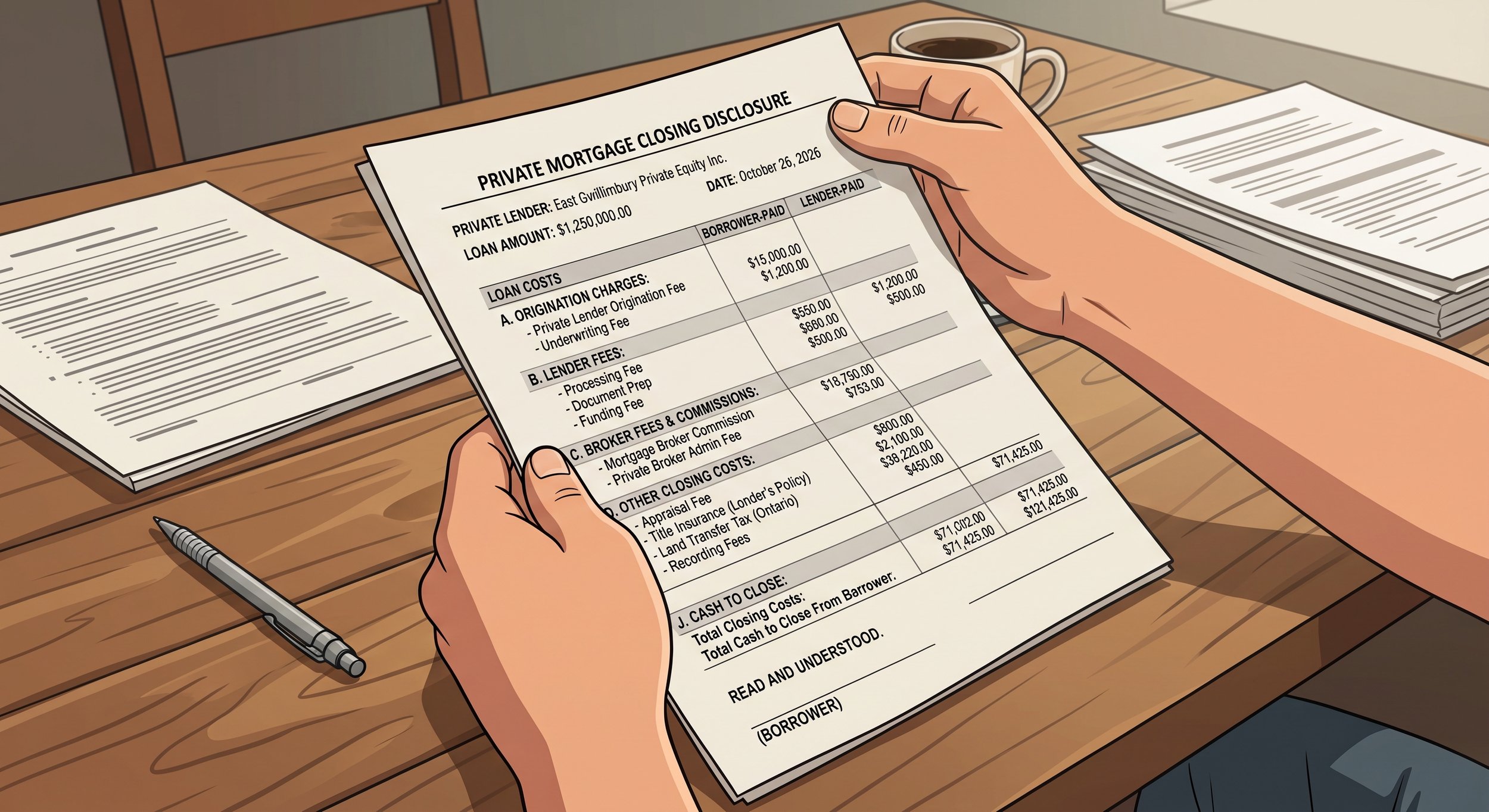
✓ The true cost: Interest, lender fees, brokerage fees, legal costs and other potential expenses.
✓ The risks: Including what happens if your exit strategy takes longer than expected.
✓ Your next step: If private financing is temporary, we’ll help you understand what needs to happen to eventually return to traditional financing.
Sometimes the best mortgage is the one you don’t take.
Frequently Asked Questions
-
Potentially. Private lenders may place greater emphasis on the property’s value and available equity than traditional lenders. Your overall situation and ability to repay will still matter.
-
Potentially. Private lenders may have more flexibility with income documentation than banks, particularly when traditional income calculations don’t reflect your full financial picture.
-
Generally, yes. Private mortgages typically have higher interest rates and/or fees than traditional financing. The exact cost depends on the lender and your specific situation.
-
Yes, potentially. A second mortgage is registered behind your existing first mortgage, allowing you to access available equity while keeping your current mortgage in place.
-
Potentially. If you have sufficient equity, private financing may allow you to consolidate certain debts. However, we need to make sure the cost of the mortgage makes financial sense.
-
Often, that’s the goal. If your circumstances improve — such as better credit, lower debt or stronger qualifying income — you may be able to refinance into a traditional mortgage when your private term ends.
-
Private mortgages are generally designed for shorter terms than traditional mortgages. The appropriate term depends on your circumstances and your expected exit strategy.