
Self-Employed
Taylor made bespoke mortgage solutions from newlyweds to growing families to those who want to enjoy their retirement. Click below for a no obligation call.
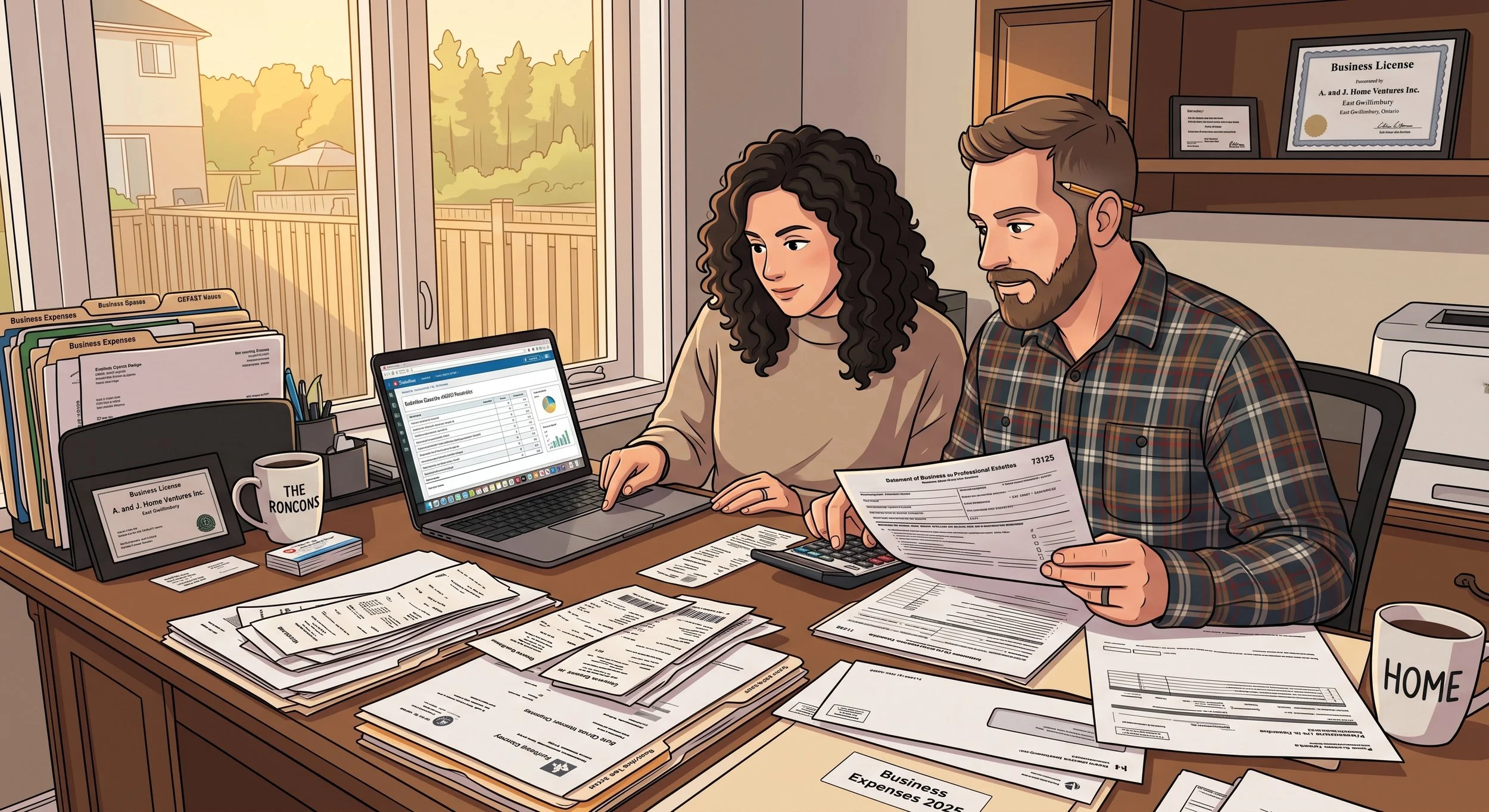
Your Business Makes Good Money. Your Tax Return Just Doesn’t Show It.
Being self-employed shouldn’t automatically make getting a mortgage harder.
Your business may generate strong income, but after legitimate business expenses, deductions, dividends, or money retained inside your corporation, your taxable income can look very different from what your business actually earns.
And that’s where many self-employed borrowers run into trouble.
The good news? You may have options.
We look at how your business is structured, how you’re paid, how your income is documented, and which lenders are most likely to work with your situation.
Does Your Tax Return Show the Full Picture of Your Income?
If you’re self-employed, you probably understand the dilemma:
The lower your taxable income, the less tax you may pay.
But when you apply for a mortgage, a traditional lender may use that lower taxable income to determine how much you can afford.
For example:
Your business generates: $150,000
Income reported after deductions: $80,000
You may know your business can comfortably support the mortgage.
The bank may only see the $80,000.
That’s where having access to multiple lenders and knowing how they calculate self-employed income becomes important.
How Do Lenders Calculate Self-Employed Income?
There isn’t one universal formula.
Depending on your business and the lender, we may be able to use:
Your Notice of Assessments (NOAs)
An average of your income over multiple years
T4s, T5s, and T1 Generals
Dividend income
Corporate financial information
Eligible income add-backs
6-2 months business bank statements & personal bank statements
The goal is to determine how much of your actual income a lender will recognize for mortgage qualification.
Two Main Paths for Self-Employed Borrowers
Option 1: Traditional A-Side Lending
If your documented income for the last 2 years is strong enough, we can explore traditional banks and A-side lenders.
This is generally the first option we want to investigate because it can provide:
Competitive mortgage rates
Lower overall borrowing costs
More mortgage product options
Potentially lower lender fees
Access to insured mortgages when eligible
Potentially less than 20% down, depending on the situation
If we can qualify you through an A-side lender, that’s usually where we’d prefer to start.
Option 2: Alternative / B-Side Lending
What if your business is doing well but your tax returns don’t show enough qualifying income?
That’s where alternative lenders can provide another potential solution.
Some alternative lenders may place greater emphasis on business cash flow and 6–12 months of business bank statements rather than relying solely on traditional tax-based income calculations.
This can be particularly helpful if you:
Write off significant business expenses
Pay yourself through dividends
Keep money inside your corporation
Have fluctuating taxable income
Have strong business deposits but relatively low personal taxable income
The trade-off?
Alternative financing generally costs more, but is more flexible.
You may have:
20%+ down payment + higher interest rate + additional lender/broker fees
The exact requirements depend on the lender and your financial situation.
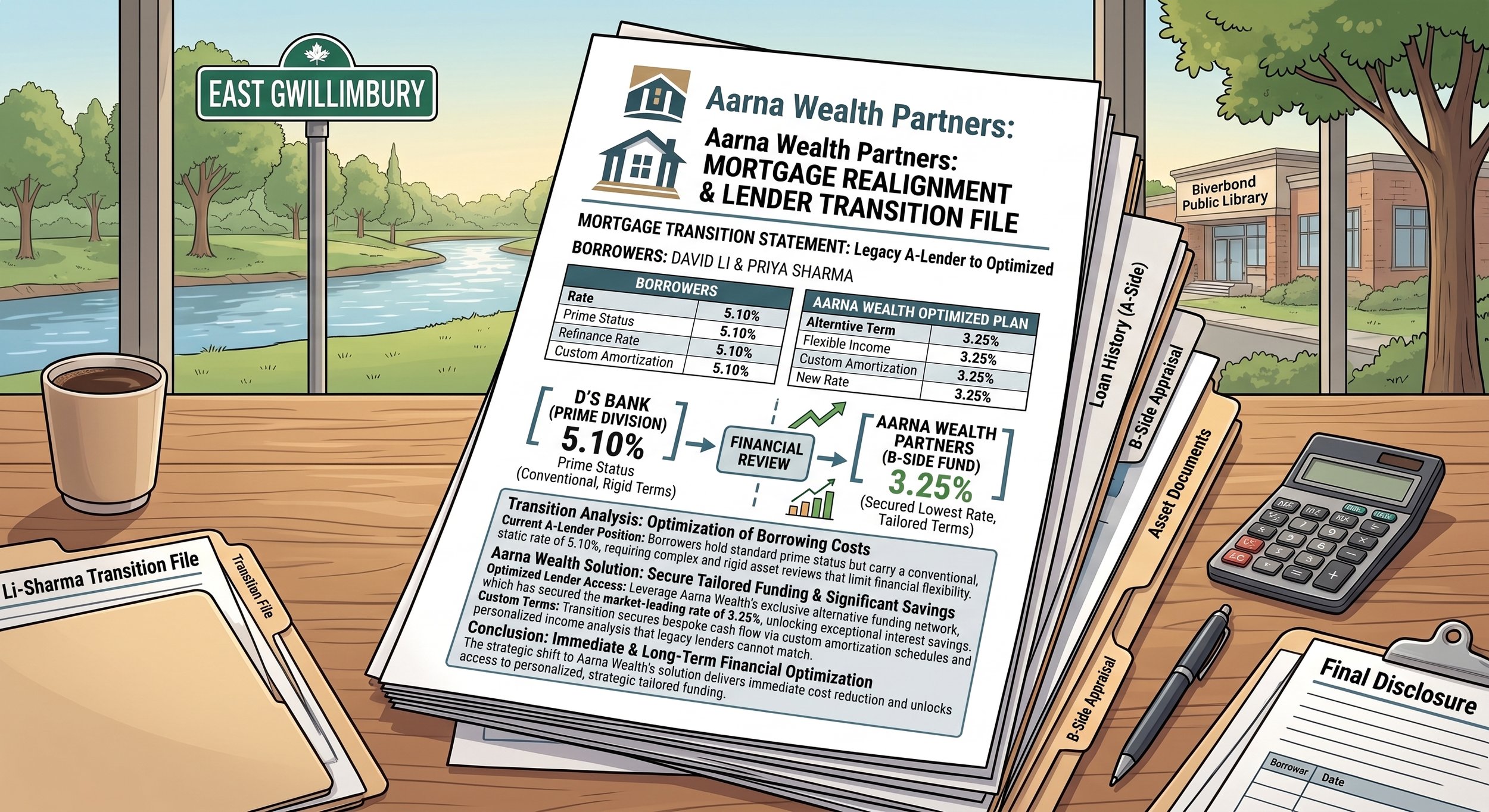
Alternative Financing Can Be a Bridge
An alternative mortgage doesn’t necessarily have to be your long-term mortgage.For some self-employed borrowers, the strategy may look like this:
Today: Your business has strong cash flow, but your taxable income doesn’t qualify for the mortgage you want.
Step 1: Use an alternative mortgage solution to purchase the property.
Step 2: Continue building your business, maintaining strong credit, and improving your documented income.
Step 3: When your financial profile qualifies for traditional lending, explore refinancing into an A-side mortgage. The strategy isn’t right for everyone, but the objective is simple:
Solve today’s problem without losing sight of tomorrow’s mortgage.

Who We Help
Our self-employed mortgage solutions can be useful for:
Business owners
Entrepreneurs
Incorporated professionals
Contractors
Consultants
Commission-based workers
Sole proprietors
Corporation owners
Dividend earners
Newly self-employed individuals
Borrowers with fluctuating income
-
Potentially, yes. Business expenses can reduce your taxable income, which can reduce the income a traditional lender uses for qualification. Depending on the lender, we may be able to use income averaging, eligible add-backs, or explore alternative lending options.
-
Potentially. Certain alternative lenders may consider 6–12 months of business bank statements as part of their income assessment. The lender may also consider your business history, credit, down payment and other factors.
-
Not necessarily. If you qualify through traditional lending, you may be able to purchase with less than 20% down, subject to applicable mortgage rules and lender requirements.
Alternative lending commonly requires at least 20% down.
-
Not necessarily. If you qualify through an A-side lender, you may have access to competitive mortgage rates.
Alternative mortgages generally have higher rates and/or additional fees because the lender is taking on additional risk.
-
Yes, potentially. Some lenders accept dividend income, but the way dividends are calculated varies between lenders.
-
That may work in your favour. Depending on the lender, there may be ways to account for recent income increases or use an average of multiple years.
-
Possibly. A shorter self-employed history can make traditional qualification more difficult, but it doesn’t automatically mean you can’t get a mortgage. Your previous employment, business performance, credit, down payment and overall financial situation may all be considered.
-
Corporate funds aren’t automatically treated the same way as personal income. However, depending on the lender and your corporate structure, there may be ways to consider your overall financial position.
-
Don’t change your tax strategy just to qualify for a mortgage without first speaking with your accountant or tax professional.
Your tax strategy and mortgage strategy are different things. Our job is to work with the income you have and determine how different lenders may assess it.
-
Not necessarily.
For some borrowers, alternative financing can be a temporary solution while they improve their documented income and financial profile. Once they meet traditional lender requirements, refinancing into an A-side mortgage may become an option.