
Refinance & Debt Consolidation
Whether you’re looking to lower your monthly payment, consolidate high-interest debt, or access the equity you’ve built in your home, refinancing could help you put your mortgage to better use.
Refinance & Debt Consolidation
Your Mortgage Should Work for You — Not Just Be Another Monthly Payment.
Whether you’re looking to lower your monthly payment, consolidate high-interest debt, or access the equity you’ve built in your home, refinancing could help you put your mortgage to better use.
At Aarna Wealth, we look at the bigger picture—not just your mortgage rate—to determine what strategy makes the most sense for you.

Looking to Lower Your Monthly Payment?
You don’t need to have debt to benefit from refinancing.
Your mortgage may have been arranged years ago, when your financial situation, interest rates or goals were completely different. A refinance could potentially help you:
Lower your monthly payment
Restructure your mortgage
Adjust your amortization
Change lenders
Access home equity
Free up monthly cash flow
Here’s a simple example:
Current mortgage: $600,000
Current payment: $3,500/month
If restructuring your mortgage reduced your payment to $3,000/month, that’s:
$500/month freed up
$6,000/year in additional cash flow
That extra $500 could go toward your investments, retirement savings, other financial goals—or simply give you more breathing room each month. Sometimes refinancing isn’t about borrowing more. It’s about making your existing mortgage work better for you.
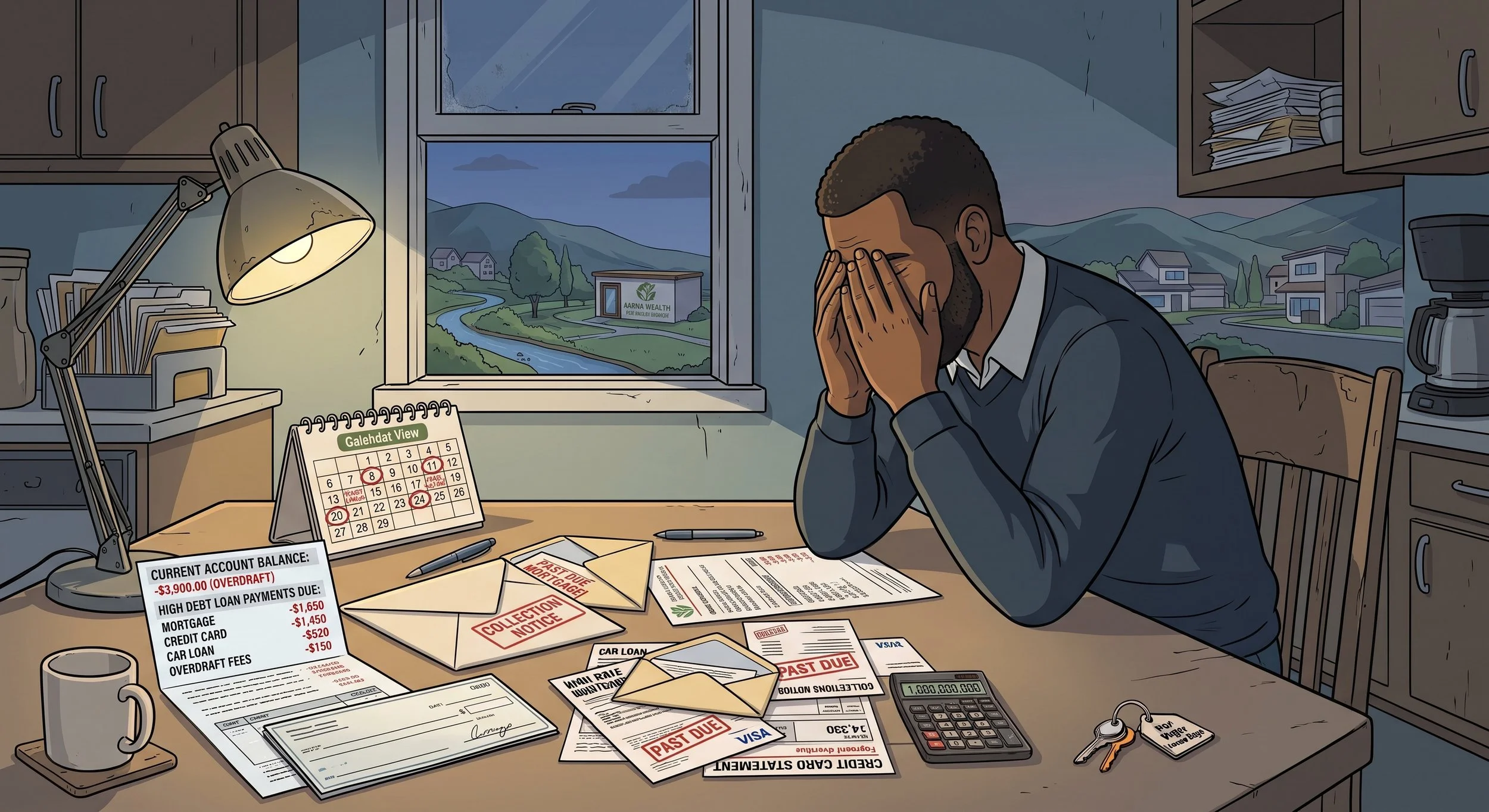
Carrying High-Interest Debt?
Stop letting high-interest debt eat away at your cash flow.
Credit cards, lines of credit and personal loans can carry significantly higher interest rates than a mortgage.If you qualify, refinancing may allow you to consolidate eligible debts into your mortgage.
For example:
Imagine you have:
Credit Cards: $20,000
Line of Credit: $15,000
Personal Loan: $15,000
Total debt: $50,000
Instead of making several separate payments at different interest rates, that $50,000 could potentially be incorporated into your mortgage.Your monthly debt payments might look something like:
Before consolidation:
$1,500/month in various debt payments
After consolidation:
Potentially $300–$400/month added to your mortgage payment*
That’s potentially $1,100+ per month back in your cash flow.
*Illustrative example only. Actual payments depend on the mortgage rate, amortization, lender, qualification and other factors.
But here’s the important part:
A lower monthly payment doesn’t automatically mean you’ll pay less interest overall. If you spread the debt over a much longer mortgage amortization, you could pay more interest over time. Our goal is to help you understand both the monthly savings AND the long-term cost.
Have Significant Equity in Your Home?
Your equity can potentially do more than sit inside your house.
If your home has increased in value or you’ve paid down your mortgage, you may have significant equity available. Depending on your situation, you may be able to access some of that equity for:
Investments
Purchasing another property
Business opportunities
Renovations
Major expenses
Debt consolidation
Other financial goals
Here’s what that could look like:
Home value: $1,000,000
Existing mortgage: $600,000
That means you have approximately $400,000 of equity in your home. You may potentially be able to access a portion of that equity—subject to lender guidelines and qualification. Instead of leaving all of your available capital tied up in your home, you could potentially use some of it toward another financial objective. The question isn’t just “How much equity do I have?”
It’s: “How can I use it strategically?”
Refinance. Consolidate. Reposition.
Whether you’re trying to:
Lower Your Payment: Create more monthly cash flow without necessarily taking on additional debt.
Consolidate Debt: Replace multiple high-interest payments with one mortgage payment and potentially a lower interest rate.
Access Equity: Unlock some of the equity you’ve built in your home for investments, another property, business or other financial goals. We’ll compare the options and help you understand the numbers.
Don’t Guess. Know Your Options.
Your mortgage may be one of the largest financial commitments you have. Let’s make sure it’s structured around where you are today—and where you want to go next.

Frequently Asked Questions
-
Absolutely. Refinancing isn’t only for debt consolidation. You may want to refinance simply to lower your monthly payment, restructure your mortgage, change lenders, adjust your amortization or access home equity.
-
It depends on your home’s current value, existing mortgage balance, income, credit profile, debts and the lender’s guidelines. Typically, banks allow you to borrow up to 80% of the value of your home.
Having significant equity doesn’t automatically mean you can access all of it. We’ll determine what may be available based on your specific situation.
-
Potentially, yes. Some homeowners access equity to purchase another property, invest in real estate, expand a business or pursue other investment opportunities.
However, borrowing to invest involves risk. Investment returns aren’t guaranteed, and the mortgage still has to be repaid.
-
Not every homeowner needs to refinance.
If your current mortgage still works for you and your lender is offering a competitive renewal, renewing may make sense.
But if your financial situation has changed, you have significant equity, you’re carrying expensive debt or you want to change your mortgage structure, it’s worth comparing your options before signing a renewal.
-
Potentially, yes.
However, breaking your existing mortgage before maturity may result in a prepayment penalty and other costs.
We’ll help you determine whether the potential benefit of refinancing is worth the cost of breaking your current mortgage.
-
A refinance generally involves a credit assessment, and the application can affect your credit profile.
However, the overall impact depends on your circumstances. If debt consolidation helps you reduce revolving debt and manage payments more effectively, it may also put you in a better financial position over time.
-
No.
Debt consolidation can be an effective strategy, but it doesn’t solve the underlying problem if new debt continues to accumulate.
Our goal is to determine whether consolidation actually improves your financial situation—not simply move debt from one place to another.
-
That’s exactly what we can help you determine.
We’ll look at your:
Mortgage + Equity + Debts + Income + Cash Flow + Goals
Then we’ll compare the available options and show you what the numbers could look like.
Sometimes the best strategy is to refinance.
Sometimes it’s to renew.
Sometimes it’s to do nothing.
The goal is to find the strategy that makes the most sense for you.